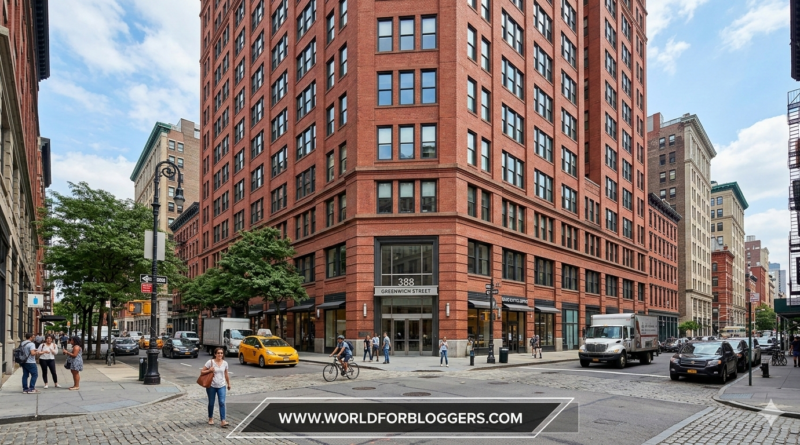
388 Greenwich Street: The Architectural Pulse of Wall Street North
In the ever-evolving skyline of Lower Manhattan, few structures command as much presence—both architecturally and economically—as 388 Greenwich Street. Often overshadowed by the soaring heights of the One World Trade Center, this building represents a pivotal shift in how the financial world views the Tribeca neighborhood. It isn’t just a collection of glass and steel; it is a vertical campus that serves as the global headquarters for Citigroup, one of the world’s most influential financial institutions.
A History of Transformation
The story of this site is one of constant evolution. Originally completed in the late 1980s, the complex was part of a larger movement to revitalize the industrial waterfront of the Hudson River. At its inception, it was known as the Travelers Building, famously adorned with the iconic red umbrella logo.
In a city where space is the ultimate luxury, the decision to establish a massive corporate headquarters in Tribeca was a bold gamble. While the “suit and tie” culture of the New York Stock Exchange was traditionally rooted in the narrow canyons of the Financial District, 388 Greenwich Street signaled a migration toward open views, larger floor plates, and a more modern approach to corporate life.
Architectural Brilliance and the “Curtain Wall”
Standing at 39 stories and reaching a height of approximately 592 feet, the building’s design is a masterclass in Postmodernism. Designed by the renowned firm Kohn Pedersen Fox (KPF), the tower features a striking blue-glass curtain wall that reflects the shifting hues of the Hudson River.
One of the most significant updates in recent years was the massive renovation that unified 388 and its neighbor, 390 Greenwich. This project wasn’t just a facelift; it was a structural reimagining. By removing the older facade and replacing it with high-performance glass, the architects created a seamless, shimmering monolith. This renovation maximized natural light—a rare commodity in New York offices—improving both energy efficiency and employee well-being.
Inside the Global Command Center
What happens inside the walls of this glass giant? As the nerve center for Citigroup, the building houses thousands of employees across various sectors, from investment banking to global markets.
- The Trading Floors: Some of the largest and most advanced trading floors in the world are located here. These expansive, open-plan spaces allow for instantaneous communication, which is vital in a market that never sleeps.
- Sustainability Initiatives: The building has achieved LEED Platinum certification, the highest rating for environmental performance. This includes sophisticated HVAC systems, water-saving fixtures, and smart lighting that adjusts based on the time of day.
- The Vertical Campus: Unlike traditional office buildings where floors are siloed, the interior of the tower is designed to foster collaboration. Large communal spaces, modern cafes, and wellness centers make it feel more like a tech campus than a 20th-century bank.
The Impact on Tribeca
The presence of a global financial hub at 388 Greenwich Street has fundamentally changed the DNA of Tribeca. Once a district of warehouses and artists’ lofts, the area is now one of the most expensive residential neighborhoods in the world.
The influx of thousands of workers daily has created a micro-economy that supports local restaurants, boutique gyms, and high-end retail. However, the building manages to maintain a respectful relationship with its surroundings. Because it sits on the edge of the neighborhood near the West Side Highway, it provides a buffer between the residential quietude of Tribeca and the bustling traffic of the arterial roads.
Engineering Resilience
New York City has faced significant challenges over the last two decades, from the tragic events of September 11th to the flooding caused by Superstorm Sandy. Because of its proximity to the water, the resilience of the infrastructure at this address is paramount.
During the recent renovations, significant investments were made in flood protection and backup power systems. The “brain” of the building—its servers and electrical hubs—is fortified against the rising tides of the Hudson, ensuring that the global financial markets remain operational even during extreme weather events.
The Future of the Workplace
As we move further into the 21st century, the role of the physical office is being questioned. With the rise of hybrid work, why does a massive tower in Manhattan still matter?
The answer lies in the concept of “The Hub.” 388 Greenwich Street isn’t just a place where people sit at desks; it’s a destination for mentorship, culture, and high-stakes decision-making. The building’s design reflects this by prioritizing meeting spaces and social zones over rows of cubicles. It serves as a physical manifestation of a brand’s stability and its commitment to the city.
“A corporate headquarters is more than just real estate; it is a statement of intent. It tells the world that you are here to stay, and you are here to lead.”
Summary of Key Features
| Feature | Detail |
| Total Height | 592 Feet |
| Floors | 39 |
| Primary Tenant | Citigroup |
| Sustainability | LEED Platinum Certified |
| Architect | Kohn Pedersen Fox (KPF) |
Conclusion: An Icon of Resilience
Whether you are viewing it from a ferry on the Hudson or walking past it on your way to Pier 25, 388 Greenwich Street stands as a testament to New York’s ability to reinvent itself. It bridges the gap between the historic industrial past of the city and its high-tech, high-finance future.
As the sun sets over the river, the glass facade of the tower catches the orange glow of the horizon, reminding us that even in a world of digital currency and remote connections, there is still a profound need for a place to call home—especially when that home is in the heart of the greatest city on earth.
Read also our recently blog: Plane Crash DC: Understanding the Risks and Realities of Capital Airspace