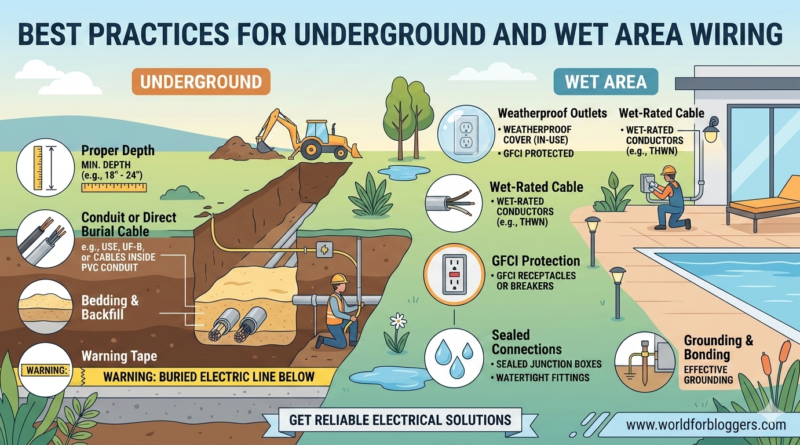
Best Practices for Underground and Wet Area Wiring
Underground and wet area wiring is one of the most critical aspects of modern electrical installations. Whether it is residential landscaping lighting, industrial pumping systems, agricultural irrigation, or commercial outdoor infrastructure, moisture exposure and underground conditions create unique challenges. Improper cable selection or poor installation practices can lead to electrical failures, safety hazards, expensive repairs, and reduced system lifespan.
To ensure durability, safety, and optimal performance, it is essential to follow proven best practices. This guide explains everything you need to know about underground and wet area wiring—from cable selection to maintenance.
Understanding the Challenges of Underground and Wet Environments
Unlike indoor wiring systems, underground and wet locations expose electrical components to:
- Continuous moisture or water immersion
- Soil chemicals and corrosion
- Mechanical pressure from soil weight
- Temperature fluctuations
- Rodent or insect damage
- Risk of accidental digging or excavation
These environmental factors can weaken insulation, corrode conductors, and increase the risk of short circuits. That is why specialized materials and installation methods are required.
1. Selecting the Right Cable Type
The first and most important step is choosing a cable specifically designed for underground or water-prone applications. Standard indoor cables are not suitable for direct burial or wet environments.
For water-based systems such as borewells, fountains, and pumping stations, a submersible cable is commonly used. This type of cable is engineered with high-quality insulation and a durable outer sheath that resists water penetration. It is designed to operate efficiently even when fully submerged, making it ideal for continuous exposure to moisture.
For direct burial installations, cables should be rated for underground use and comply with local electrical codes. Always verify that the cable carries appropriate certifications before installation.
2. Importance of High-Quality Conductor Material
The conductor is the heart of any electrical cable. Its material determines how efficiently electricity flows and how much energy is lost during transmission.
In many professional installations, a bare copper conductor is preferred due to its superior conductivity and durability. Copper offers low resistance, which reduces voltage drop and minimizes heat generation. This becomes particularly important in underground wiring, where heat dissipation is limited.
Copper also provides better corrosion resistance compared to many alternative materials. Since underground cables are often exposed to damp soil conditions, choosing a corrosion-resistant conductor significantly extends the lifespan of the system.
3. Proper Insulation and Sheathing Protection
Insulation acts as the primary barrier between electrical current and environmental elements. In wet and underground applications, insulation quality should never be compromised.
Common insulation materials include:
- PVC (Polyvinyl Chloride)
- XLPE (Cross-Linked Polyethylene)
- EPR (Ethylene Propylene Rubber)
XLPE insulation is particularly popular due to its high thermal resistance, excellent electrical properties, and moisture resistance.
Additionally, the outer sheath should be thick, durable, and resistant to abrasion. In areas where chemical exposure is likely, chemical-resistant jackets are recommended. Double-layer insulation provides added protection and enhances long-term safety.
4. Maintaining Proper Burial Depth
Correct burial depth is crucial for protecting underground cables from mechanical damage. If buried too shallow, cables are vulnerable to accidental digging, landscaping tools, or vehicle pressure.
While burial depth varies according to local electrical codes, typical residential installations range between 18 to 24 inches deep. Commercial or high-voltage installations may require greater depth.
Before installation, always consult local regulations and building codes to ensure compliance.
5. Using Conduit for Additional Protection
Although some cables are rated for direct burial, installing them inside a conduit adds an extra layer of safety. PVC or HDPE conduits protect cables from:
- Physical impact
- Soil movement
- Rodent damage
- Water accumulation
Conduit systems also make future cable replacement easier, reducing long-term maintenance costs.
Installing warning tape a few inches above the buried cable is another important precaution. This visual indicator helps prevent accidental damage during excavation.
6. Effective Grounding and Fault Protection
Water significantly increases the risk of electrical shock. Therefore, proper grounding and fault protection systems are essential.
Key safety measures include:
- Installing Ground Fault Circuit Interrupters (GFCIs)
- Using Residual Current Devices (RCDs)
- Ensuring proper earthing systems
- Bonding all metallic components
A well-designed grounding system directs fault current safely into the earth, minimizing the risk of injury or equipment damage.
7. Waterproof Junction Boxes and Connections
Cable joints and terminations are often the weakest points in underground wiring systems. Poorly sealed joints allow moisture intrusion, leading to corrosion and system failure.
To prevent this:
- Use waterproof junction boxes
- Install heat-shrink sleeves
- Apply resin-filled joint kits
- Ensure tight and sealed cable glands
Never rely on temporary taping methods for underground connections. Professional-grade sealing solutions provide long-term reliability and safety.
8. Preventing Voltage Drop in Long Runs
Underground installations often involve long cable runs, especially in agricultural fields or large commercial properties. Long distances increase voltage drop, which can reduce equipment efficiency.
To minimize voltage drop:
- Use conductors with adequate cross-sectional area
- Choose high-conductivity materials
- Keep cable runs as short as possible
- Avoid unnecessary joints
Proper cable sizing calculations should always be performed before installation.
9. Regular Inspection and Preventive Maintenance
Even with high-quality materials and proper installation, periodic inspection is necessary. Underground systems may not be visible, but they still require monitoring.
Recommended maintenance practices include:
- Insulation resistance testing
- Thermal scanning (for accessible panels)
- Load monitoring
- Checking grounding integrity
Early detection of potential problems prevents costly system failures and downtime.
10. Compliance with Electrical Codes and Standards
Every country has its own electrical safety standards and building codes. Compliance ensures safety, reliability, and legal protection.
Before installation:
- Review national and local electrical regulations
- Use certified materials
- Hire licensed professionals
- Document installation details
Following recognized standards not only protects property but also enhances credibility for contractors and suppliers.
Conclusion
Underground and wet area wiring requires specialized planning, high-quality materials, and professional installation practices. From selecting the right cable type to ensuring proper grounding and waterproof connections, every step plays a vital role in system performance.
Using moisture-resistant cables, durable insulation, and high-conductivity conductors significantly improves safety and efficiency. Proper burial depth, conduit protection, and regular maintenance further extend the lifespan of the installation.
Whether you are handling a residential landscape project, an agricultural irrigation system, or an industrial facility, applying these best practices will help you achieve a reliable, long-lasting, and code-compliant electrical system.
Read also our recently blog: How Online Animation Tools Are Changing Visual Storytelling