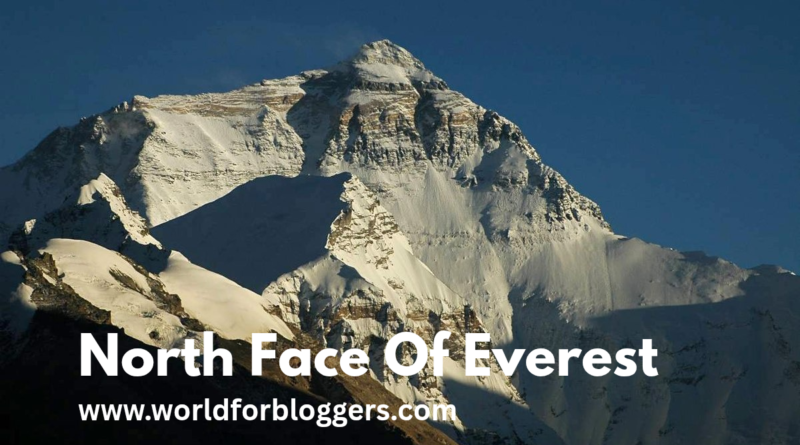
North Face of Everest: The Ultimate Test of Human Endurance
North Face of Everest: An Icon of Extreme Mountaineering
We explore one of the most formidable landscapes on Earth, the north face of Everest, a towering wall of ice, rock, and relentless weather that has challenged the limits of human endurance for decades. Rising from the Tibetan side of Mount Everest, this face is renowned for its steep gradients, unpredictable conditions, and historic ascents that shaped modern high-altitude mountaineering.
Unlike more commercialized routes, this face represents purity, risk, and uncompromising difficulty. We present a comprehensive and authoritative account designed to inform, educate, and inspire those seeking factual depth and clarity.
Geographical Location and Physical Structure
The north face of Everest lies within the Tibet Autonomous Region of China, overlooking the Rongbuk Glacier. This massive wall ascends from approximately 6,500 meters to the summit at 8,848.86 meters, forming a near-vertical challenge of ice gullies, exposed rock bands, and towering seracs.
Key physical features include:
- The North Col, a critical saddle at around 7,020 meters
- The Great Couloir, known for extreme avalanche risk
- Rock Buttresses, which demand advanced technical climbing
The face is subjected to powerful jet stream winds, especially during winter and pre-monsoon seasons, making timing an essential factor for survival.
Historical Significance and Early Expeditions
The north face of Everest played a central role in early Himalayan exploration. British expeditions in the 1920s approached Everest exclusively from the north due to geopolitical boundaries. These early climbers laid the groundwork for altitude science, oxygen use, and expedition logistics.
Notable milestones include:
- The 1924 expedition involving George Mallory and Andrew Irvine
- The first confirmed ascent from the north in 1960 by a Chinese team
- Reinforcement of the route’s reputation as a climber’s proving ground
These achievements elevated the north route into mountaineering legend.
Climbing Routes and Technical Challenges
Climbing the north face of Everest requires mastery of advanced alpine techniques. The standard North Ridge Route includes steep ice slopes, knife-edge ridges, and exposed traverses at extreme altitude.
Major challenges faced by climbers include:
- Thin oxygen levels above 8,000 meters
- Extended exposure to high winds
- Technical rock sections near the summit ridge
The route demands precision, discipline, and elite physical conditioning, leaving little margin for error.
Weather Patterns and Seasonal Windows
The north face of Everest is heavily influenced by the jet stream, which can generate winds exceeding 160 km/h. Climbers rely on brief weather windows, typically in late May or early autumn, when winds temporarily subside.
Weather-related risks include:
- Sudden whiteouts
- Wind chill temperatures below -40°C
- Rapid barometric pressure changes
Accurate forecasting and disciplined decision-making are non-negotiable.
Risk Factors and Fatality Considerations
The north face of Everest carries inherent risks that surpass many other high-altitude routes. Objective dangers such as avalanches, icefall collapse, and rockfall are constant threats.
Additional hazards include:
- High-Altitude Cerebral and Pulmonary Edema
- Frostbite due to prolonged exposure
- Physical exhaustion at extreme elevation
These risks reinforce why this face remains respected rather than overcrowded.
Permits, Regulations, and Access
Access to the north face of Everest is strictly regulated by Chinese authorities. Climbers must obtain permits through authorized agencies and adhere to fixed climbing seasons and environmental protocols.
Regulatory aspects include:
- Mandatory waste management systems
- Fixed rope usage in designated sections
- Rescue and communication compliance
These measures aim to preserve safety and environmental integrity.
Equipment and Preparation Standards
Preparation for the north face of Everest requires uncompromising standards. Climbers must carry specialized gear engineered for extreme cold, altitude, and technical terrain.
Essential equipment includes:
- High-altitude mountaineering boots
- Layered down suits
- Technical ice tools and crampons
- Supplemental oxygen systems
Equally critical is prior experience above 7,000 meters.
Cultural and Symbolic Importance
Beyond physical challenges, the north face of Everest holds profound symbolic value. It represents perseverance, exploration, and respect for nature’s extremes. For Tibetan communities, the mountain carries spiritual significance, reinforcing the importance of ethical climbing practices.
This cultural dimension adds depth to every ascent, transforming it into more than a physical endeavor.
Why the North Face Remains Unmatched
The north face of Everest continues to command admiration because it resists simplification. It cannot be conquered casually or commercially replicated. Every ascent demands humility, preparation, and acceptance of risk.
We recognize this face not as a destination for mass adventure, but as a benchmark of mountaineering excellence.
Conclusion: A Legacy Carved in Ice and Stone
The north face of Everest stands as a timeless monument to human ambition and resilience. Its history, terrain, and challenges form a narrative unmatched in the world of high-altitude climbing. For those who study it, respect it, or aspire to face it, this legendary wall remains the ultimate test.
Read also our recently blog: What Is Landscaping: A Complete Professional Guide
Pingback: How Students Can Stay Ahead with Professional Help - SPOTIF
Pingback: Everest: Beyond the Clouds - Instander