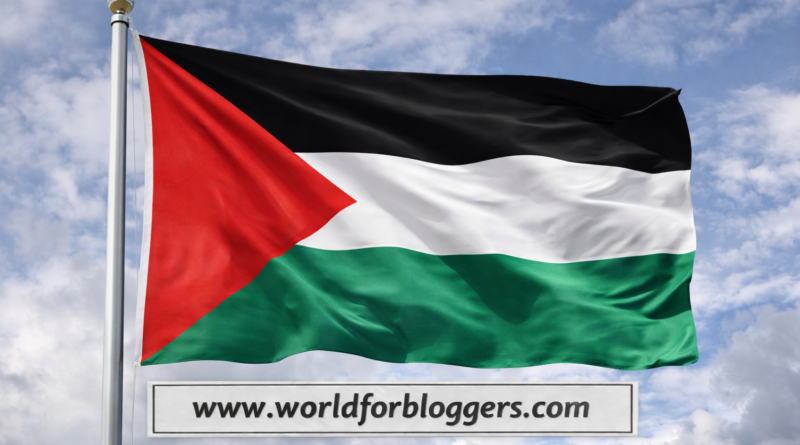
Palestine Flag: A Symbol of Identity, History, and Resilience
In the grand tapestry of global heraldry, few banners carry as much emotional weight, historical depth, and immediate recognizability as the Palestine flag. To the casual observer, it is a striking arrangement of black, white, and green stripes anchored by a red triangle. To millions of people worldwide, however, it is a profound testament to a storied past and a persistent hope for the future.
This article explores the origins, the hidden meanings behind the colors, and the evolving role of this emblem in the modern world.
The Historical Genesis of the Colors
The design of the Palestine flag is not an accidental aesthetic choice; it is deeply rooted in the Pan-Arab movement of the early 20th century. Its origins can be traced back to the Great Arab Revolt of 1916 against the Ottoman Empire.
The colors used—black, white, green, and red—were chosen to represent the great dynasties of Islamic history:
- Black: Representing the Abbasid Caliphate.
- White: Symbolizing the Umayyad Caliphate.
- Green: Associated with the Fatimid Caliphate and widely regarded as the color of Islam.
- Red: Representing the Hashemite dynasty and the blood of those who fought for independence.
By weaving these threads together, the banner connects a modern national identity to centuries of cultural and political heritage.
Symbolism Behind the Stripes
Beyond its dynastic roots, the modern interpretation of the Palestine flag has taken on a more poetic and localized meaning. Many Palestinians and scholars describe the colors through the lens of the land and the struggle:
- The Black Stripe: Often interpreted as a symbol of the dark days of oppression and the memory of those lost.
- The White Stripe: Represents peace and the purity of the message that the people wish to send to the world.
- The Green Stripe: A direct nod to the land itself—the olive groves, the rolling hills, and the agricultural vitality of the region.
- The Red Triangle: This serves as a “tent” or a guide, symbolizing the blood shed for freedom and the unity of the people.
A Banner of Cultural Resilience
For decades, the Palestine flag has served as a primary vessel for cultural expression. During periods when the display of the banner was restricted or prohibited in certain jurisdictions, the symbol survived through “artistic camouflage.”
One of the most famous examples of this is the “Watermelon Protest.” Because a sliced watermelon shares the same color palette—red flesh, black seeds, and a green and white rind—it became a clever, subversive stand-in for the national colors in art and public demonstrations. This ingenuity showcases how a symbol is more than just fabric; it is an idea that cannot be easily suppressed.
The Flag in Global Advocacy
In the age of social media, the Palestine flag has transcended physical borders. It has become a global shorthand for solidarity. From the streets of London and New York to digital profiles on Instagram and X, the banner is used by people of diverse backgrounds to signal their support for human rights and international law.
“A flag is not just a piece of cloth; it is a collective memory, a heartbeat, and a visual bridge between the past and the possible.”
Design and Proportions
While many flags use similar color schemes (such as Jordan, Kuwait, or the UAE), the specific arrangement of the Palestine flag is distinct. It features three equal horizontal stripes (black on top, white in the middle, and green on the bottom) with a red isosceles triangle based on the hoist side.
The mathematical precision of the triangle—usually extending to the middle of the white stripe—gives it a balanced and bold look that is easily identifiable even from a distance or in low-resolution digital formats.
| Color | Meaning (Historical) | Meaning (Contemporary) |
| Black | Abbasid Caliphate | Mourning/History |
| White | Umayyad Caliphate | Peace/Purity |
| Green | Fatimid Caliphate | The Land/Fertility |
| Red | Hashemite Dynasty | Sacrifice/Unity |
The Role of the Flag in Art and Literature
Palestinian poets like Mahmoud Darwish and artists like Sliman Mansour have frequently used the imagery of the Palestine flag to anchor their work. In literature, the colors often serve as metaphors for the landscape. Red is the poppy, green is the sage, and white is the limestone of the ancient cities.
By integrating these colors into poetry and painting, the people have ensured that their national identity remains vibrant, even in the face of displacement. The flag becomes a “home” that can be carried in a pocket, painted on a wall, or sung in a verse.
Legal and Political Evolution
The formal adoption of the banner by the Palestine Liberation Organization (PLO) in 1964 solidified its status. Later, in 1988, it was officially recognized as the flag of the State of Palestine.
A landmark moment occurred in September 2015, when the United Nations voted to allow the Palestine flag to fly outside its headquarters in New York City. This was a symbolic victory on the international stage, marking a significant step in the quest for global recognition and diplomatic parity.
Conclusion: More Than Just a Fabric
The Palestine flag continues to be a powerful icon of the 21st century. It represents a bridge between an ancient history and a modern quest for self-determination. Whether it is being waved at a sporting event, displayed in a museum, or held high during a march, it remains a steadfast reminder of a people’s enduring presence and their hope for a peaceful future.
Understanding the history of this banner is essential for anyone looking to grasp the complexities of the region’s identity. It is a symbol that refuses to be forgotten, draped in the colors of the earth, the ancestors, and the aspirations of tomorrow.
Read also our recently blog: Winter storm Blair