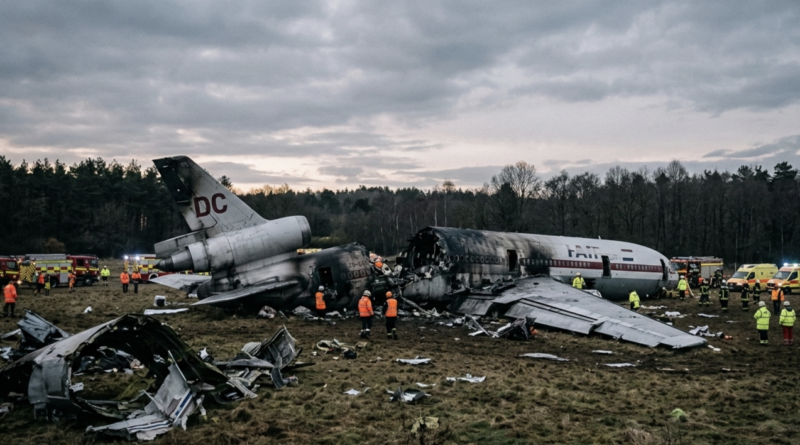
Plane Crash DC: Understanding the Risks and Realities of Capital Airspace
The skies above Washington, D.C., are perhaps the most scrutinized and protected cubic acres of air on the planet. For residents and visitors alike, the sight of a low-flying aircraft often triggers a mix of curiosity and a deep-seated, post-9/11 anxiety. When the phrase plane crash DC enters the news cycle, it doesn’t just represent a local emergency; it triggers a massive federal response, national security protocols, and an immediate investigation into how a vehicle penetrated the most restricted “no-fly zone” in the United States.
Understanding the mechanics of aviation safety in the District requires looking past the headlines. It involves a deep dive into the Special Flight Rules Area (SFRA), the unique geography of the Potomac River, and the high-stakes coordination between civilian air traffic control and military defense.
The Invisible Fortress: Washington’s Restricted Airspace
To understand why a plane crash DC event is so rare—and so significant when it occurs—one must first understand the “Flight Restricted Zone” (FRZ). Stretching in a roughly 15-mile radius around Ronald Reagan Washington National Airport (DCA), this airspace is a multi-layered cake of security.
- The SFRA: A 30-mile radius where every pilot must be on a flight plan and in constant communication with controllers.
- The FRZ: The inner 15-mile circle, often called “The Freeze,” where general aviation is strictly limited to vetted pilots and specific airfields.
- P-56: The prohibited areas directly over the White House, the National Mall, and the Vice President’s residence.
When an aircraft deviates from its path in this area, it isn’t just a navigational error; it’s a national security event. The protocols to prevent a catastrophic incident are redundant and rigorous, involving everything from laser warnings to F-16 intercepts.
The Geography of Risk: The Potomac River Factor
Most major cities have an airport, but few have one as geographically challenging as Reagan National. Pilots flying into the heart of the District must master the “River Visual” approach. To avoid the prohibited airspace over the White House and the Pentagon, aircraft follow the winding path of the Potomac River.
While this provides a scenic view for passengers, it leaves very little margin for error. Historically, when people discuss a potential plane crash DC, they often recall the 1982 Air Florida Flight 90 disaster. That aircraft, burdened by ice and pilot error, crashed into the 14th Street Bridge before sinking into the frozen Potomac.
That event fundamentally changed how the aviation world views “de-icing” procedures and winter operations. It also highlighted the unique challenge of the District: there are very few “empty” spaces to put a plane down in an emergency. The river is often the only viable, though dangerous, option.
Modern Safety: Why Crashes are Increasingly Rare
Despite the density of the region, the likelihood of a major commercial plane crash DC has plummeted over the last four decades. This isn’t by accident. It is the result of three specific technological and procedural shifts:
1. Enhanced Ground Proximity Warning Systems (EGPWS)
Modern cockpits are equipped with “look-ahead” terrain mapping. If a plane is descending too quickly or is off-course toward a monument or building, the system provides loud, clear verbal commands to “Pull Up.”
2. NextGen Air Traffic Control
The shift from radar-based tracking to satellite-based (GPS) tracking allows controllers to see the position of a plane with much higher precision. In the crowded corridors of the Northeast, this precision is the difference between a safe landing and a mid-air conflict.
3. Pilot Training and Fatigue Regulations
Human error remains the leading cause of aviation incidents. Since the Colgan Air crash in 2009 (which occurred in Buffalo but sparked DC-led legislative change), the FAA has mandated stricter rest requirements and higher flight-hour minimums for co-pilots.
The Role of General Aviation and Small Craft
While commercial airliners are highly regulated, the risk often shifts to “General Aviation”—private pilots flying Cessnas or Pipers. A plane crash DC involving a small aircraft is usually the result of mechanical failure or “scud running” (trying to fly under low clouds).
Small airfields in Maryland and Virginia, such as College Park or Manassas, serve as the gateways for these pilots. If a small engine fails over the city, the pilot faces a harrowing choice. The dense urban canopy of Northwest D.C. offers no refuge. Most are trained to aim for the water or, in extreme cases, the wider boulevards if traffic permits.
Emergency Response: A Multi-Agency Ballet
If a plane crash DC were to occur today, the response would be unlike any other city. Because the District is federal land, the jurisdictional overlap is immense.
- D.C. Fire and EMS: The primary first responders for life-saving and fire suppression.
- Park Police: Handling incidents on the National Mall or along the parkways.
- The NTSB: Headquartered right in D.C., the National Transportation Safety Board would have investigators on-site within minutes.
- Metropolitan Police (MPD): Tasked with perimeter control and urban logistics.
The coordination of these units is practiced regularly in “tabletop exercises” to ensure that if the unthinkable happens, the transition from rescue to investigation is seamless.
The Psychological Impact on the Capital
There is a unique “DC-specific” anxiety regarding aviation. Because of the events of September 11, any loud engine noise or low-flying helicopter causes heads to turn. The news of a plane crash DC carries a weight of trauma that other cities might not experience in the same way.
This heightened awareness actually serves as a safety mechanism. The “See Something, Say Something” culture is nowhere more prevalent than in the Potomac TRACON (Terminal Radar Approach Control). If a drone is spotted near the Capitol or a Cessna drifts five degrees off course, it is reported and addressed within seconds.
Lessons from History
We look to the past not to dwell on tragedy, but to build better systems. The history of aviation in the District is a story of constant refinement. From the 1949 mid-air collision over National Airport to the more recent 2023 incident where a private jet breached the airspace and crashed in Virginia, each event leads to a “Notice to Airmen” (NOTAM) that tightens the net of safety.
We now have sophisticated “Remote ID” for drones and rigorous background checks for any pilot wishing to land at the three “Maryland Three” airports (College Park, Potomac Airfield, and Washington Executive).
Conclusion: A Sky of Constant Vigilance
While the idea of a plane crash DC is a sobering thought, the reality is that the D.C. airspace is a masterpiece of modern engineering and surveillance. The combination of elite pilot training, satellite tracking, and the most stringent airspace rules in the world makes the District one of the safest places to fly.
The “River Visual” will always remain a beautiful, if demanding, flight path. The monuments will always stand as silent sentinels. And as long as the federal government resides in these few square miles, the sky above will remain the most protected ceiling in the world.
Read also our recently blog: United flight ua967 diverted: A detailed look at the mid-air event