Siberia Vladivostok: A Journey to the Edge of the World
The name Siberia often evokes images of endless white tundras, frozen lakes, and a silence so profound it feels eternal. Yet, at the very end of this vast expanse lies a city that defies the stereotype: Vladivostok. Serving as the terminal point of the legendary Trans-Siberian Railway, Siberia Vladivostok represents the intersection of rugged Russian endurance and the vibrant energy of the Pacific Rim. It is a place where the rails finally meet the waves, and where the “Wild East” feels more like a gateway to the future than a relic of the past.
The Legend of the Iron Road
For many travelers, the journey to Siberia Vladivostok begins thousands of miles to the west in Moscow. The Trans-Siberian Railway is not just a mode of transport; it is a rite of passage. Spanning over 9,000 kilometers, the “Rossiya” train chugs through seven time zones, crossing the Ural Mountains and the dense taiga before finally descending toward the Sea of Japan.
Arriving at the Vladivostok Railway Station is a cinematic experience. Built in the 17th-century Russian style with intricate mosaics and a majestic ceiling, the station houses a stone milestone that reads “9288”—the distance from the capital. For those who have spent a week on the tracks, this city is the ultimate prize, a coastal sanctuary after the long isolation of the Siberian plains.
A City of Bridges and Bays
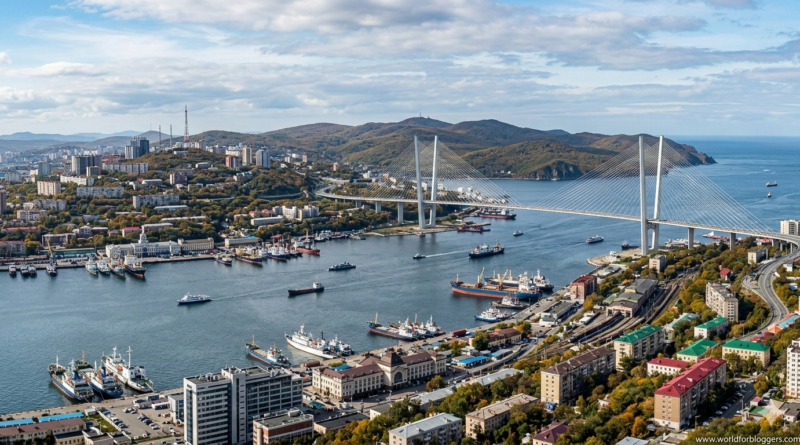
Often compared to San Francisco due to its hilly terrain and dramatic coastline, Vladivostok is a city defined by water. The Golden Horn Bay, a deep and sheltered harbor, is the heart of the city’s maritime identity. In the past decade, the skyline has been transformed by two massive cable-stayed bridges: the Golden Bridge and the Russky Bridge.
The Russky Bridge, in particular, is an engineering marvel. It connects the mainland to Russky Island, once a closed military zone and now home to the Far Eastern Federal University and the world-class Primorsky Aquarium. Walking along the waterfront embankments, such as the Tsesarevich Embankment, allows visitors to feel the pulse of a city that is constantly looking toward its Asian neighbors—China, Japan, and Korea.
The Cultural Melting Pot of the Far East
While it is technically the capital of the Russian Far East, the influence of Siberia Vladivostok is decidedly international. You can see this most clearly in the “Millionka” district. Once a densely populated Chinese quarter filled with opium dens and secret alleyways, it has been revitalized into a trendy neighborhood of brick buildings, street art, and hidden cafes.
The food scene reflects this cultural fusion. While you can certainly find traditional Siberian borscht and pelmeni, the local specialty is “Pyanse”—a steamed Korean-style bun filled with spicy meat and cabbage. Seafood is also king here. Giant Kamchatka crabs and fresh scallops are staples of the local diet, often enjoyed with a view of the Pacific horizon.
Relics of the Pacific Fleet
History is etched into the very cliffs of the city. As the home of the Russian Pacific Fleet, Vladivostok has always been a strategic fortress. The S-56 Submarine Museum, located on the shore of the Golden Horn Bay, offers a claustrophobic yet fascinating look at life under the sea during World War II.
High above the city, the Vladivostok Fortress consists of a network of bunkers and batteries built in the late 19th century. These fortifications were designed to protect Russia’s eastern frontiers and remain remarkably well-preserved. Exploring these tunnels provides a stark reminder of the city’s role as a sentinel on the edge of the continent.
Beyond the City: Nature’s Playground
The proximity of Siberia Vladivostok to raw, untouched nature is perhaps its greatest draw. Just a short drive or boat ride away, the landscape shifts from urban sprawl to jagged cliffs and emerald forests. Cape Tobizina on Russky Island is a favorite for hikers, offering panoramic views of the Sea of Japan where the waves crash against vertical rock faces.
For a truly unique experience, many visit Glass Bay. Once a dumping ground for glass bottles during the Soviet era, the ocean has spent decades tumbling the shards into smooth, colorful “pebbles.” The result is a shimmering beach that looks like a mosaic of jewels under the sun—a beautiful example of nature reclaiming human waste and turning it into art.
The Siberian High and the Changing Seasons
Timing your visit to Siberia Vladivostok is crucial, as the climate is heavily influenced by the “Siberian High”—a mass of cold, dry air that descends from the north.
- Summer (July–August): The most popular time, featuring humidity, fog, and warm enough temperatures for swimming in the bays.
- Autumn (September–October): Often considered the “velvet season,” with crisp air and the surrounding taiga turning brilliant shades of gold and red.
- Winter (December–February): Brutally cold and windy, but visually stunning. The bays freeze over, allowing locals to engage in the traditional pastime of ice fishing.
- Spring (April–May): A time of rapid change as the ice thaws and the city prepares for the maritime season.
Practical Tips for the Modern Explorer
Navigating the Far East requires a bit of preparation. While the city has modernized significantly, having a few offline maps and translation apps is highly recommended.
- Transport: Use the city’s funicular for the best views. It’s one of only two in Russia and takes you straight to the Eagle’s Nest observation point.
- Connectivity: The city is a hub for high-speed internet, making it a surprisingly viable spot for digital nomads looking for an offbeat destination.
- Logistics: Most international travelers arrive via the airport, which has frequent connections to Seoul, Tokyo, and Beijing (though schedules vary based on the current geopolitical climate).
Why Vladivostok Matters
In a world that is increasingly interconnected, Siberia Vladivostok remains one of the few places that feels genuinely “remote” while offering all the comforts of a modern metropolis. It is a city of contradictions: a naval base with a bohemian soul, a Russian outpost with an Asian heartbeat, and the end of a long journey that feels like a brand-new beginning.
Whether you are a railway enthusiast, a history buff, or a nature lover, the trip to Siberia Vladivostok offers a perspective on the world that you simply cannot find anywhere else. It is a reminder that even at the edge of the world, there is life, beauty, and a harbor waiting to welcome you home.
Key Attractions Summary Table
| Location | Highlights | Best Time to Visit |
| Russky Island | Primorsky Aquarium, Cape Tobizina | June – September |
| S-56 Submarine | WWII History, Interior Tours | Year-round |
| Eagle’s Nest Hill | Panoramic City Views, Funicular | Sunset |
| Glass Bay | Colorful Glass Pebbles, Photography | Sunny Days |
| Millionka | Historic Architecture, Street Food | Afternoon/Evening |
If you’re interested in the logistics of the journey, would you like me to help you draft a sample 7-day itinerary for a trip starting in Siberia Vladivostok?
Read also our recently blog: 5-Star vs Budget Umrah Packages – What’s Really Included