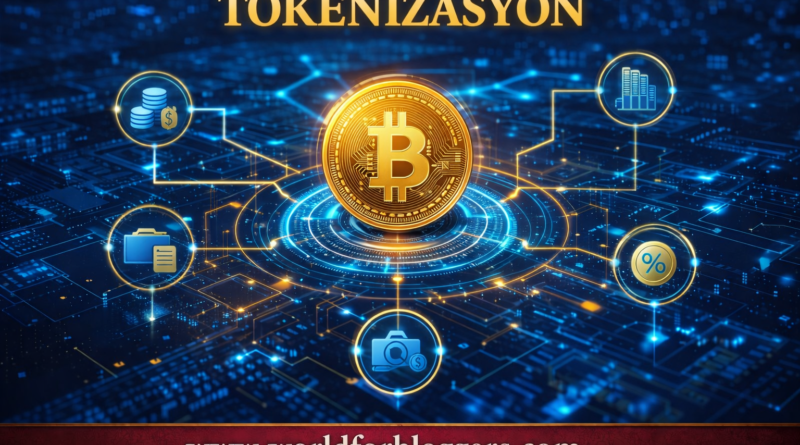
Tokenizasyon: The Digital Bridge to Modern Asset Management
The global financial landscape is currently navigating a period of unprecedented structural change. At the heart of this transition lies a concept that bridges the gap between traditional tangible assets and the decentralized future: tokenizasyon. By converting rights to an asset into a digital token on a blockchain, we are witnessing the birth of a more inclusive, liquid, and transparent economy.
While the term often surfaces in discussions about cryptocurrency, its implications reach far deeper into real estate, fine art, venture capital, and even intellectual property. This article explores the mechanics, benefits, and future trajectory of this transformative technology.
The Mechanics of Value Migration
To understand how value is migrating from paper-based systems to digital ledgers, we must first look at the infrastructure. Unlike traditional databases, a blockchain serves as an immutable record. When we apply the process of tokenizasyon to a physical object—say, a commercial building—the property’s legal rights are encoded into a smart contract.
This smart contract defines the rules of ownership, dividend distribution, and voting rights. Once the token is minted, it represents a fractional or full claim on the underlying asset. This shift moves us away from slow, intermediary-heavy settlements toward a 24/7 global marketplace.
Breaking the Barriers of Liquidity
Historically, high-value assets like real estate or rare collectibles have been “illiquid.” If you owned a $10 million painting and needed $100,000 for an emergency, you couldn’t simply slice off a corner of the canvas and sell it. You would have to sell the entire piece, a process involving auction houses, massive fees, and months of waiting.
Digital tokenizasyon solves this by enabling fractional ownership. By dividing a high-value asset into thousands of digital units, an owner can sell a small percentage of their holding to a global pool of investors. This not only provides the owner with instant liquidity but also allows smaller investors to enter markets that were previously gatekept by high minimum investment requirements.
Key Advantages of Fractional Assets:
- Lower Entry Barriers: Retail investors can own a piece of a “Blue Chip” asset for as little as $100.
- Diversification: Instead of putting all capital into one property, an investor can spread their funds across twenty different tokenized projects globally.
- Reduced Transaction Costs: By removing several layers of brokers and administrative paperwork, the cost of transferring ownership drops significantly.
Security and Transparency through Smart Contracts
One of the most compelling arguments for tokenizasyon is the elimination of “human error” and fraud. In traditional finance, verifying the authenticity of a title deed or a share certificate requires trust in a central authority. On a blockchain, the proof is in the code.
Every time a token changes hands, the transaction is timestamped and visible to all participants on the network. This level of transparency ensures that the same asset cannot be sold twice (the double-spending problem) and that the history of ownership is untampered. Furthermore, smart contracts can automate compliance. For instance, a token can be programmed to only be tradable between “verified” users who have passed KYC (Know Your Customer) checks, ensuring that the asset remains within legal regulatory frameworks automatically.
Real-World Applications: From Art to Infrastructure
The versatility of this technology is staggering. We are already seeing significant movements in various sectors:
1. Real Estate: This is perhaps the most mature sector for digital conversion. Platforms are now allowing users to earn rental income proportionally based on the number of tokens they hold in a specific property.
2. Fine Art and Collectibles: Masterworks by artists like Banksy or Picasso have been tokenized, allowing art enthusiasts to own a “share” of a masterpiece.
3. Supply Chain and Commodities: Tracking the provenance of gold, diamonds, or even organic coffee becomes seamless. Tokenizasyon allows for the creation of digital twins that follow a product from the mine or farm to the end consumer.
4. Intellectual Property: Musicians and authors can tokenize their royalties. Instead of waiting for a streaming platform to pay out every six months, they can sell a portion of their future earnings to fans, gaining immediate capital to fund their next project.
The Regulatory Horizon
Despite the technical readiness, the widespread adoption of tokenizasyon faces a primary hurdle: regulation. Different jurisdictions have varying definitions of what constitutes a security. For the digital asset revolution to reach its full potential, international frameworks must be harmonized.
Currently, regions like Switzerland, Singapore, and parts of the UAE are leading the way by providing clear “Sandboxes” for companies to experiment with asset-backed tokens. As the legal clarity improves, institutional players—including major investment banks—are expected to migrate trillions of dollars of “Old World” assets onto the chain.
“The tokenization of the market could fundamentally change the way we perceive value and ownership, turning every static asset into a dynamic, tradable unit of the global economy.”
Future Outlook: A Borderless Economy
As we move toward 2030, the distinction between a “digital asset” and a “real asset” will likely blur. We are heading toward a reality where your digital wallet won’t just hold currencies, but also the deed to your house, the registration of your car, and your fractional shares in a renewable energy farm.
The efficiency gains offered by tokenizasyon are too significant to ignore. By reducing the time to settle trades from “T+2 days” to “Instant,” we free up massive amounts of capital that is currently trapped in the plumbing of the financial system. This speed, combined with the security of blockchain, creates a more resilient economic foundation.
Conclusion
The shift toward tokenizasyon is not just a trend; it is an evolution of how humanity tracks and exchanges value. It represents a move away from opaque, centralized systems toward a transparent, decentralized, and highly efficient digital future. While challenges remain in terms of global regulation and user education, the momentum is undeniable.
By democratizing access to high-growth assets and injecting liquidity into stagnant markets, we are opening the door to a truly globalized economy where opportunity is not limited by geography or net worth. The digital twins of our physical world are being minted today, and they are here to stay.
Read also our recently blog: Foenegriek