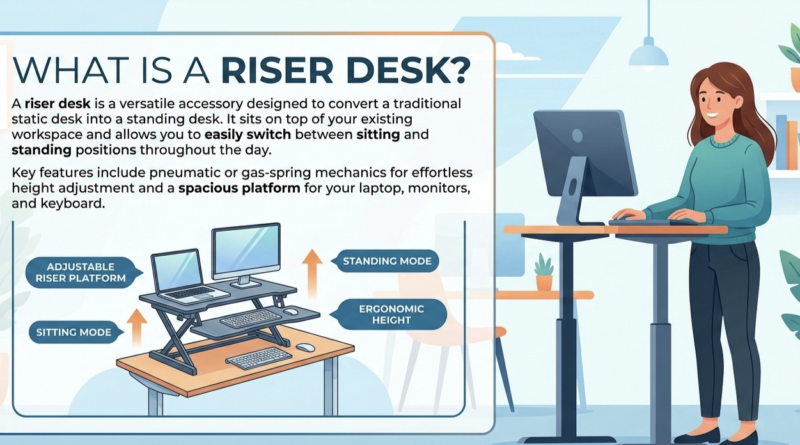
What is a Riser Desk? Elevate Your Workspace and Productivity
In the modern professional landscape, the “cubicle hunch” has become an all-too-familiar silhouette. As we spend upward of eight to ten hours tethered to our digital workstations, the physical toll of a sedentary lifestyle is no longer a whisper—it’s a loud, aching shout from our lower backs and necks. Enter the ergonomic revolution. While many have heard of standing desks, there is a specific, versatile hero in the office furniture world that often gets overlooked: the riser.
But specifically, what is a riser desk, and how does it differ from the towering adjustable tables we see in tech startups? This guide dives deep into the mechanics, benefits, and lifestyle shifts associated with this essential piece of ergonomic gear.
Defining the Riser: More Than Just a Shelf
To answer the fundamental question—what is a riser desk—we have to look at its form and function. Unlike a full-standing desk, which replaces your entire existing furniture setup, a riser (also known as a desk converter) is an adjustable platform designed to sit directly on top of your current workspace.
Think of it as an “upgrade kit” for your furniture. It typically features a primary surface for your monitors and a secondary, lower tier for your keyboard and mouse. Using either a gas-spring mechanism, an electric motor, or a manual notched system, the riser allows you to transition from a sitting position to a standing one in seconds without moving a single cable or clearing your desk.
The Anatomy of a High-Quality Riser
- The Top Tier: Spacious enough for dual monitors or a laptop-and-monitor combo.
- The Keyboard Tray: Ergonomically positioned to keep your elbows at a 90-degree angle.
- The Lift Mechanism: Usually a “Z-shape” or “X-shape” frame that ensures stability so your screens don’t wobble while you type.
Why Choose a Riser Over a Full Standing Desk?
Many people researching what is a riser desk are trying to decide between a converter and a completely new motorized desk. There are several logistical and financial reasons why a riser often wins the debate:
- Cost-Effectiveness: High-end motorized desks can cost upwards of $800. A premium riser provides the same ergonomic benefits at a fraction of the price.
- No Assembly Hassle: Most risers come nearly fully assembled. You simply take them out of the box, place them on your desk, and you’re ready to go.
- Preserving Your Furniture: If you have a beautiful antique mahogany desk or a built-in workstation that you love, you don’t want to throw it away. A riser allows you to keep your aesthetic while adding modern functionality.
- Stability and Storage: Because they sit on a solid foundation (your actual desk), risers often feel more grounded than cheap, four-legged standing desks that might sway at their maximum height.
The Health Science: Why Standing Matters
We’ve established the “what,” but the “why” is even more compelling. The human body was not designed to remain in a seated, folded position for the duration of the daylight hours. When we sit for prolonged periods, our metabolic rate drops, our circulation slows, and the discs in our spine endure uneven pressure.
Combatting “Sitting Disease”
Research has consistently shown that alternating between sitting and standing can mitigate the risks of obesity, type 2 diabetes, and cardiovascular disease. By using a riser, you encourage “micro-movements.” You shift your weight, engage your core, and even improve your circulation.
Posture Correction
When you understand what is a riser desk and how to use it correctly, you realize it’s a tool for spinal alignment. By bringing your monitor to eye level, you eliminate the “forward head carriage” (text neck) that leads to chronic headaches and upper back tension.
Productivity and Psychology: The Hidden Benefits
Beyond the physical perks, there is a psychological shift that occurs when you stand up. Many users report an immediate “energy burst” when they transition to a standing position.
- Focus and Alertness: Standing increases blood flow to the brain. Many professionals find that they perform “active” tasks—like clearing emails or taking sales calls—better while standing, saving “deep work” like writing or coding for seated sessions.
- Mood Elevation: Studies have linked sedentary behavior to increased risks of anxiety and depression. The simple act of changing your physical perspective throughout the day can break the monotony of a long afternoon.
How to Set Up Your Riser for Success
Knowing what is a riser desk is only half the battle; knowing how to calibrate it is where the magic happens. An improperly configured riser can actually cause more harm than good.
1. The 90-Degree Rule
Your elbows should be at a 90-degree angle when your hands are on the keyboard. If the keyboard tray is too high, you’ll strain your shoulders. If it’s too low, you’ll lean forward.
2. Monitor Height
The top third of your computer screen should be at eye level. This ensures your neck remains in a neutral position, looking slightly downward without tilting the chin.
3. Footwear and Flooring
If you are standing on a hard floor, a riser is only as good as what’s under your feet. Invest in an anti-fatigue mat. These cushioned surfaces encourage subtle muscle contractions in your calves, which keeps blood moving and prevents foot soreness.
Common Myths About Desk Risers
As you explore what is a riser desk, you might encounter some common misconceptions. Let’s clear the air:
- “You have to stand all day.” This is actually counterproductive. The goal is movement. The “sweet spot” recommended by ergonomic experts is a 1:1 or 2:1 ratio of sitting to standing.
- “They are only for tall people.” Modern risers are incredibly adjustable. Whether you are 5’2″ or 6’4″, a quality converter will have enough height increments to accommodate your frame.
- “They take up too much space.” While they do have a footprint, many risers lift vertically within their own frame, meaning they don’t stick out further into your room when raised.
Choosing the Right Model for Your Needs
Not all converters are created equal. When shopping, keep these three factors in mind:
Weight Capacity
Check the weight of your monitors. If you use heavy, 32-inch ultra-wide screens, you need a riser with a robust gas-spring lift that can handle 30+ lbs without straining.
Worksurface Depth
Ensure your existing desk is deep enough to hold the riser. Some models require at least 24 inches of depth to sit securely without overhanging the edge.
Manual vs. Electric
Manual gas-spring models are faster and don’t require an extra power outlet. Electric models are better for those with limited physical strength or those who want “memory presets” to hit the perfect height every time.
Making the Transition: A 7-Day Plan
If you’ve just figured out what is a riser desk and bought one, don’t try to stand for eight hours on day one. Your body needs to adjust.
- Day 1-2: Stand for 15 minutes every hour.
- Day 3-4: Increase to 20 or 30 minutes.
- Day 5-7: Find your rhythm. You might find you prefer standing during meetings and sitting during lunch or intense reading.
Conclusion: The Future of Your Workday
The workspace of the future isn’t about fancy gadgets; it’s about adaptability. Understanding what is a riser desk gives you the power to reclaim your health without sacrificing your professional output. It is a bridge between the traditional office and a more active, vibrant way of living.
By investing in a riser, you aren’t just buying a piece of metal and wood; you are investing in your longevity, your focus, and your daily comfort. It’s time to stand up for your well-being—literally.
Read also our recently blog: Champions House Wrexham: A Comprehensive Guide to Recovery and Community