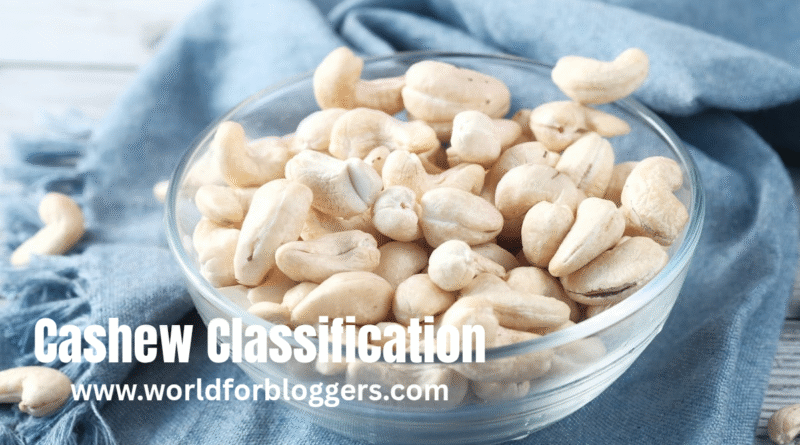
Cashew Classification: A Comprehensive Guide to Global Grading Standards
Understanding cashew classification is essential for producers, suppliers, and consumers who demand consistent quality in the global nut market. As one of the most valuable tree nuts in international trade, cashews undergo a meticulous grading, sorting, and quality-assessment process that determines their market value. In this guide, we explore the scientific, commercial, and industrial methods that shape how cashews are evaluated worldwide.
What Is Cashew Classification and Why It Matters
The term cashew classification refers to the systematic process of grading cashew kernels based on size, color, texture, moisture level, and breakage ratio. These classifications set the standard for pricing, packaging, and export categories. By following precise grading rules, cashew processors ensure uniformity, premium quality, and compliance with international specifications.
This classification system enables buyers to select the exact cashew grade suited for retail, confectionery, roasting, or industrial food production. It also strengthens the reliability of supply chains by providing clarity on quality and yield.
Global Standards Governing Cashew Classification
Most countries adhere to the guidelines set by the Cashew Export Promotion Council, AFI (Association of Food Industries), and national quality-control authorities. These standards define the essential characteristics that must be evaluated during cashew classification.
1. Kernel Size and Grade Codes
Cashews are graded into whole nuts, splits, and pieces. Each grade is identified by numeric codes such as W180, W210, W240, and W320.
- W180 – Known as “King of Cashews,” large and premium.
- W210 – Super jumbo, high-value export grade.
- W240 – Popular commercial grade with excellent quality and affordability.
- W320 – Most widely available and commonly used in the food industry.
These size codes are foundational to cashew classification, determining pricing and usage.
2. Color Uniformity
Cashew kernels range from bright white to pale ivory. Grades such as White Scorched, Scorched Second, and Dessert Grade represent variations in color due to roasting, drying, or processing conditions. Color uniformity remains a critical factor in classification since buyers expect visual consistency.
3. Moisture Content
International standards require cashews to have moisture levels below 5%. Higher moisture affects shelf life and increases the risk of molds. During cashew classification, moisture is tested to ensure optimal preservation.
4. Defects and Contaminants
Cashews are inspected for blisters, insect damage, black spots, skin residue, and broken kernels. A lower defect ratio results in a higher grade. Quality inspections ensure that kernels meet safe consumption criteria.
Processing Stages That Influence Cashew Classification
From harvesting to packaging, each stage in the cashew supply chain impacts the final grade of the kernel. Understanding these steps gives deeper insight into how cashew classification is determined.
Harvesting and Drying
Manual harvesting ensures the fruit is collected at optimal maturity. Sun-drying is used to reduce moisture in the shell, preparing the nut for further processing. Poor drying affects kernel color and texture, thereby influencing classification outcomes.
Roasting and Shelling
Cashews are roasted either by steaming or drum roasting. This loosens the shell, allowing clean removal of the kernel. Precise temperature control is necessary to avoid scorching the kernel, which leads to lower-grade classification.
Peeling and Grading
Once shelled, the thin testa (brown skin) is removed from the kernel. The nuts are then sorted by hand or machine, categorizing them according to the established cashew classification rules. High-tech optical sorting systems are increasingly used in major processing countries.
Quality Assurance Testing
Before global export, cashews undergo checks for microbiological safety, moisture levels, aflatoxin presence, and uniformity. These assessments finalize the classification and determine packaging labels.
Different Classes Within Cashew Classification Systems
Whole Cashew Grades
These include W180, W210, W240, W320, W450, and W500. Whole nuts attract the highest price due to their visual appeal and strong consumer demand.
Split Grades
Split kernels such as SW (Scorched Wholes) and SS (Scorched Splits) are widely used in confectionery and bakery applications. They still meet high-quality standards despite being separated at the natural split line.
Broken Grades
Pieces like LWP (Large White Pieces), SWP (Small White Pieces), and BB (Baby Bits) are economical choices ideal for processed foods, granola, and nut mixes.
These classifications segment the entire cashew market, ensuring each kernel reaches its most suitable commercial use.
Factors Affecting the Cashew Classification Outcome
Geographical Origin
Cashews grown in India, Vietnam, Brazil, and Africa each have unique size and flavor profiles. Soil, climate, and cultivation practices can affect kernel size and color, influencing classification.
Post-Harvest Handling
Improper drying or rough handling can cause breakage, discoloration, or moisture imbalance, resulting in downgraded classifications.
Storage Conditions
Exposure to heat, humidity, or air can degrade the kernel’s crispness and color, making it essential to maintain controlled storage environments. This is crucial for preserving grading quality throughout the export journey.
Importance of Cashew Classification for Exporters and Consumers
Accurate cashew classification offers benefits across the entire supply chain:
- It ensures transparent pricing and fair trade.
- It helps exporters maintain international credibility.
- It enables buyers to select consistent, certified quality.
- It improves the efficiency of large-scale food manufacturing.
- It protects consumers by ensuring safe, reliable nuts.
With growing global demand, classification systems serve as the backbone of the international cashew industry.
Conclusion
A precise and standardized cashew classification system is essential for maintaining quality in the competitive global market. From kernel size and color to moisture levels and defect ratios, every attribute shapes the final grade and value. By understanding these principles, buyers and producers can make informed decisions, ensuring the finest cashew products reach consumers worldwide.
Read our recently blog: Beton Celular Autoclavizat: Benefits, Applications & Installation
Your article helped me a lot, is there any more related content? Thanks! https://accounts.binance.com/register-person?ref=IHJUI7TF
Thank you for your sharing. I am worried that I lack creative ideas. It is your article that makes me full of hope. Thank you. But, I have a question, can you help me?
Your point of view caught my eye and was very interesting. Thanks. I have a question for you.
Thank you for your sharing. I am worried that I lack creative ideas. It is your article that makes me full of hope. Thank you. But, I have a question, can you help me?