
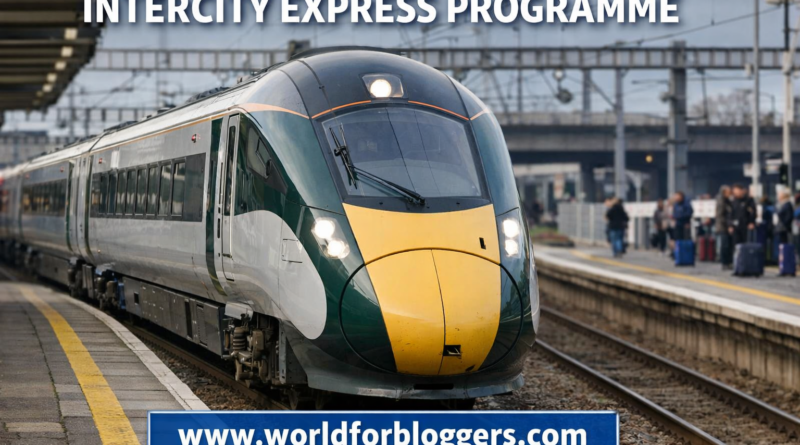
Intercity Express Programme: Revolutionizing the Future of British Rail
The Intercity Express Programme stands as one of the most significant infrastructure overhauls in the history of the United Kingdom’s railways. For decades, the backbone of the British rail network relied on aging diesel fleets and the iconic, yet tiring, InterCity 125s. As passenger numbers surged and the demand for greener, faster transport became undeniable, the Department for Transport embarked on a mission to modernize long-distance travel.
This initiative wasn’t just about replacing old trains; it was about reimagining the passenger experience and building a fleet capable of navigating a transitionary era of electrification. Through a public-private partnership, the project introduced the Class 800 series—sleek, aerodynamic units that have since become a common sight on the Great Western and East Coast Main Lines.
The Vision Behind the Modernization
The inception of the Intercity Express Programme was rooted in a simple problem: capacity. By the early 2000s, the UK’s primary arteries were clogged. The solution required more than just extra carriages; it required a technological leap. The goals were clear:
- Reduced Journey Times: Improved acceleration and higher top speeds.
- Increased Capacity: Modern interior layouts that maximize seating without compromising comfort.
- Environmental Sustainability: A shift away from pure diesel towards electric and “bi-mode” power.
Hitachi Rail was ultimately selected to lead the manufacturing, bringing Japanese bullet-train precision to the British countryside. The result was the “Azuma” and “Nova” fleets, known technically as the AT300 product family.
Bi-Mode Technology: The Great Bridge
Perhaps the most innovative aspect of the Intercity Express Programme was the introduction of bi-mode technology. While much of the UK rail network is electrified via overhead lines, significant stretches—particularly in the north of Scotland and the west of England—remain unelectrified.
The Class 800 series solved this by carrying under-floor diesel generator “power packs.”
- Under the Wires: The train draws power from the overhead lines, emitting zero emissions at the point of use.
- On Non-Electrified Routes: The engines kick in, allowing the train to continue its journey without passengers having to switch to a different service.
This flexibility ensured that the benefits of modern rail weren’t restricted to London-centric routes, but reached deep into the regions.
Engineering Excellence and Passenger Experience
When you step onto a train born from the Intercity Express Programme, the difference from the 1970s-era predecessors is immediately apparent. The engineering focus shifted toward “intelligent” design.
1. Ergonomics and Space
The trains utilize a slim-profile internal wall design, which provides more shoulder room and wider aisles. For the daily commuter or the long-distance traveler, this means less “clutter” and a more airy, open atmosphere.
2. Real-Time Information
Each carriage equipped with sophisticated GPS-linked displays. Unlike older systems that often fell out of sync, these provide live updates on connections, platform arrivals, and seat reservations, significantly reducing passenger anxiety.
3. Reliability and Maintenance
The “Agility Trains” consortium doesn’t just build the trains; they maintain them. Using a “Maintenance as a Service” model, sensors throughout the train monitor engine health, door cycles, and brake wear in real-time. This predictive maintenance prevents the dreaded “signal failure” or “mechanical breakdown” delays that once plagued the network.
Economic Impact and Local Manufacturing
A common critique of large UK infrastructure projects is that they outsource labor. However, the Intercity Express Programme acted as a catalyst for the return of rail manufacturing to the UK. Hitachi established a massive state-of-the-art facility in Newton Aycliffe, County Durham.
This move created thousands of jobs in the North East, reviving a proud heritage of railway engineering that dates back to George Stephenson. The ripple effect through the supply chain—from steel fabrication to software development—has injected millions into the local economy.
| Feature | Old Fleet (IC125) | New Fleet (IEP Class 800) |
| Top Speed | 125 mph | 140 mph (design speed) |
| Power Source | Diesel | Electric / Bi-Mode |
| Seat Capacity | Approx. 450 | Up to 600+ (9-car) |
| Accessibility | Limited | Fully TSI Compliant |
Environmental Footprint: A Greener Track
Sustainability was a non-negotiable pillar of the project. By shifting heavy loads from diesel to electric power, the Intercity Express Programme has contributed to a significant reduction in carbon emissions per passenger kilometer. Even in diesel mode, the modern engines meet stringent “Stage IIIB” emissions standards, which are far cleaner than the aging Paxman Valenta engines they replaced.
Furthermore, the regenerative braking systems allow the trains to feed electricity back into the grid (or the overhead lines) every time they slow down. It is a circular approach to energy that was unthinkable during the previous generation of rail travel.
Challenges and Critiques
No project of this scale is without its hurdles. During the rollout, some passengers noted that the seats in the new fleet were firmer than the “armchairs” found on the older InterCity 225s. This was a deliberate safety and maintenance choice (using fire-retardant materials and thinner frames to increase legroom), but it sparked a debate about the balance between efficiency and luxury.
There were also technical teething issues, such as the discovery of fine cracks in some lifting points during maintenance checks. However, the rigorous safety protocols of the programme meant these were identified and rectified with minimal disruption to the long-term viability of the fleet.
The Future: Beyond the Current Fleet
The Intercity Express Programme laid the groundwork for the next generation of high-speed travel, including the technology being developed for HS2. It proved that the UK could successfully integrate high-tech, high-capacity rolling stock into a complex, Victorian-era network.
As we look toward 2030 and beyond, the modular nature of these trains means they upgraded. There is already talk of replacing the diesel power packs with battery technology or hydrogen cells as those technologies mature, potentially making the fleet 100% carbon-neutral even on unelectrified tracks.
Conclusion
The Intercity Express Programme represents more than just a fleet of new trains; it is a symbol of a country modernizing its vitals. By blending Japanese engineering with British manufacturing and a keen eye on environmental responsibility, the project has ensured that rail remains the most viable and attractive option for long-distance travel in the UK. Whether you are traveling for business between London and Edinburgh or taking a scenic trip to the Cornish coast, the legacy of this programme is a smoother, faster, and greener journey.
Read also our recently blog: Lamps4u